🤖 Advanced Robotic Oral Cancer Surgery
🎗 Advanced Head & Neck Cancer Surgery Specialist
🏥 Consultant Head & Neck Cancer Surgeon – KIMS Hospital, Thane
⚕ 3000+ Complex Cancer Surgeries Successfully Performed
🎓 Ex-Fellow – Tata Memorial Hospital, Mumbai
📚 87+ International Publications till May 2026 in Head & Neck Oncology
🏆 Maharashtra Cancer Warrior Award 2025
📞 Book Appointment: +91 7738900970
🤖 Advanced Robotic Oral Cancer Surgery
🎗 Advanced Head & Neck Cancer Surgery Specialist
🏥 Consultant Head & Neck Cancer Surgeon – KIMS Hospital, Thane
⚕ 3000+ Complex Cancer Surgeries Successfully Performed
🎓 Ex-Fellow – Tata Memorial Hospital, Mumbai
📚 82+ International Publications in Head & Neck Oncology
🏆 Maharashtra Cancer Warrior Award 2025
📞 Book Appointment: +91 7738900970

Robotic Oral Cancer Surgery in Thane
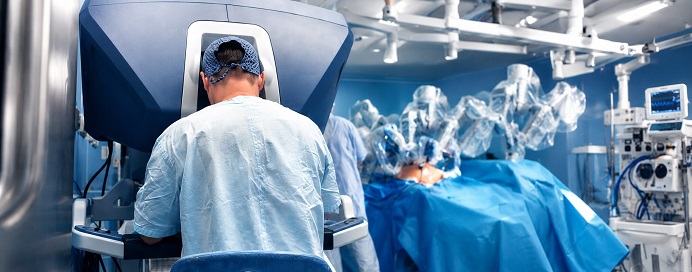
Robotic-assisted surgery has become an option for selected head and neck cancers where access to the tumor through the mouth can be appropriate. Transoral Robotic Surgery (TORS) uses a surgeon-controlled robotic system with a camera and specialized instruments to work through the mouth rather than relying on a conventional external approach. Dr. Hitesh R Singhavi is a Consultant Head & Neck Onco-Surgeon with 14+ years of experience and has performed more than 3,000 advanced Head & Neck Cancer surgeries.
What Is Robotic Oral Cancer Surgery?
Robotic oral cancer surgery, commonly referred to as transoral robotic surgery, allows the surgeon to control small instruments and a camera from a console. The system provides a magnified three-dimensional view of the operating area and can assist with access to selected areas of the mouth and throat.
The technology is designed to support the surgeon; it does not independently perform the cancer operation. The surgeon remains responsible for assessing the tumor and controlling the instruments throughout the procedure.
When Can Robotic Surgery Be Considered?
Robotic surgery is not appropriate for every oral or head and neck cancer. It may be considered for selected tumors where the cancer can be reached safely through the mouth and the surgical approach is appropriate for the individual case. TORS is particularly used in selected cancers involving areas toward the back of the mouth and throat.
The decision may take into account:
- Location and size of the tumor
- Extent of disease and involvement of surrounding structures
- Whether the tumor can be accessed adequately through the mouth
- Findings from imaging, biopsy and other investigations
- The patient's overall health and treatment plan
How Is Robotic-Assisted Cancer Surgery Performed?
During TORS, the surgeon operates through the mouth using specialized robotic instruments and a camera. The surgeon controls the instruments directly, while the camera provides an enlarged view of the surgical field. This approach can provide access to selected areas that may otherwise be difficult to reach.
The exact operation varies according to the cancer being treated. In some patients, treatment may also involve management of lymph nodes in the neck or additional cancer therapy depending on the final diagnosis and pathology.
Potential Role of Robotic Surgery in Oral Cancer Care
For appropriately selected patients, a transoral approach may avoid the need for a more extensive external surgical access. It can also provide the surgeon with enhanced visualization and instrument control in certain anatomical locations.
However, robotic surgery is an approach rather than a guarantee of better results for every patient. Conventional surgery or other cancer treatments may be more appropriate depending on the tumor and the overall treatment plan. The American Cancer Society notes that the type of surgery depends on factors including the cancer's location and stage.
Dr. Hitesh R Singhavi's Head & Neck Oncology Expertise
Dr. Hitesh R Singhavi has dedicated his surgical practice to Head & Neck Oncology and complex cancer procedures. With 14+ years of experience and more than 3,000 advanced Head & Neck Cancer surgeries, his work includes oral cancer and other complex head and neck malignancies.
His expertise also includes Airway & Emergency Surgery, Oropharyngeal Cancer Surgery, Neck Surgery and Maxillofacial Trauma Surgery. These services can form part of a broader treatment plan when a patient's cancer requires additional surgical procedures.
He has also contributed to academic research with 87+ publications in Head & Neck Cancer till May 2026 and serves as Section Editor for Head & Neck Cancer at the Indian Journal of Cancer.
What Happens After Robotic Oral Cancer Surgery?
Recovery depends on the site and extent of the operation and the individual's overall condition. Some patients may require additional treatment after surgery based on the pathology report and other clinical findings. For Oral Cancer and oropharyngeal cancers, treatment may involve surgery alone or a combination with radiation, chemotherapy or other therapies depending on the diagnosis.
Follow-up is important after treatment so that the surgical site, recovery and overall cancer status can be monitored.
Frequently Asked Questions
Is robotic surgery suitable for every oral cancer patient?
No. Robotic-assisted surgery is considered only when the tumor's location, extent and accessibility make the approach appropriate. A specialist assessment is required before deciding on the surgical technique.
What is TORS?
TORS stands for Transoral Robotic Surgery. It uses a surgeon-controlled robotic system to operate through the mouth on selected tumors in the mouth and throat.
Does the robot perform the surgery by itself?
No. The surgeon controls the robotic instruments throughout the procedure. The robotic system provides specialized instruments and visualization that can assist with the operation.
Can robotic surgery be used for throat cancer?
TORS can be used for selected cancers of the oropharynx and other appropriate areas of the mouth and throat. Suitability depends on the individual tumor and clinical assessment.
Will I need other treatment after robotic surgery?
Possibly. Further treatment depends on the cancer type, stage, surgical findings and pathology. Some patients may require radiation or other cancer treatment following surgery.
Who performs robotic oral cancer surgery in Thane?
Dr. Hitesh R Singhavi is a Consultant Head & Neck Onco-Surgeon associated with KIMS Hospital, Thane, with experience in complex Head & Neck Oncology and robotic-assisted oral cancer surgery.